
 DIY Solution
At the absolute lowest end is the DIY solution. Simply make or obtain a linear polarizer to fit on top of or within the field lens recess below the condenser, and cut another from thin polarizing sheet film to fit within the viewing head mounting recess (beneath the viewing head).
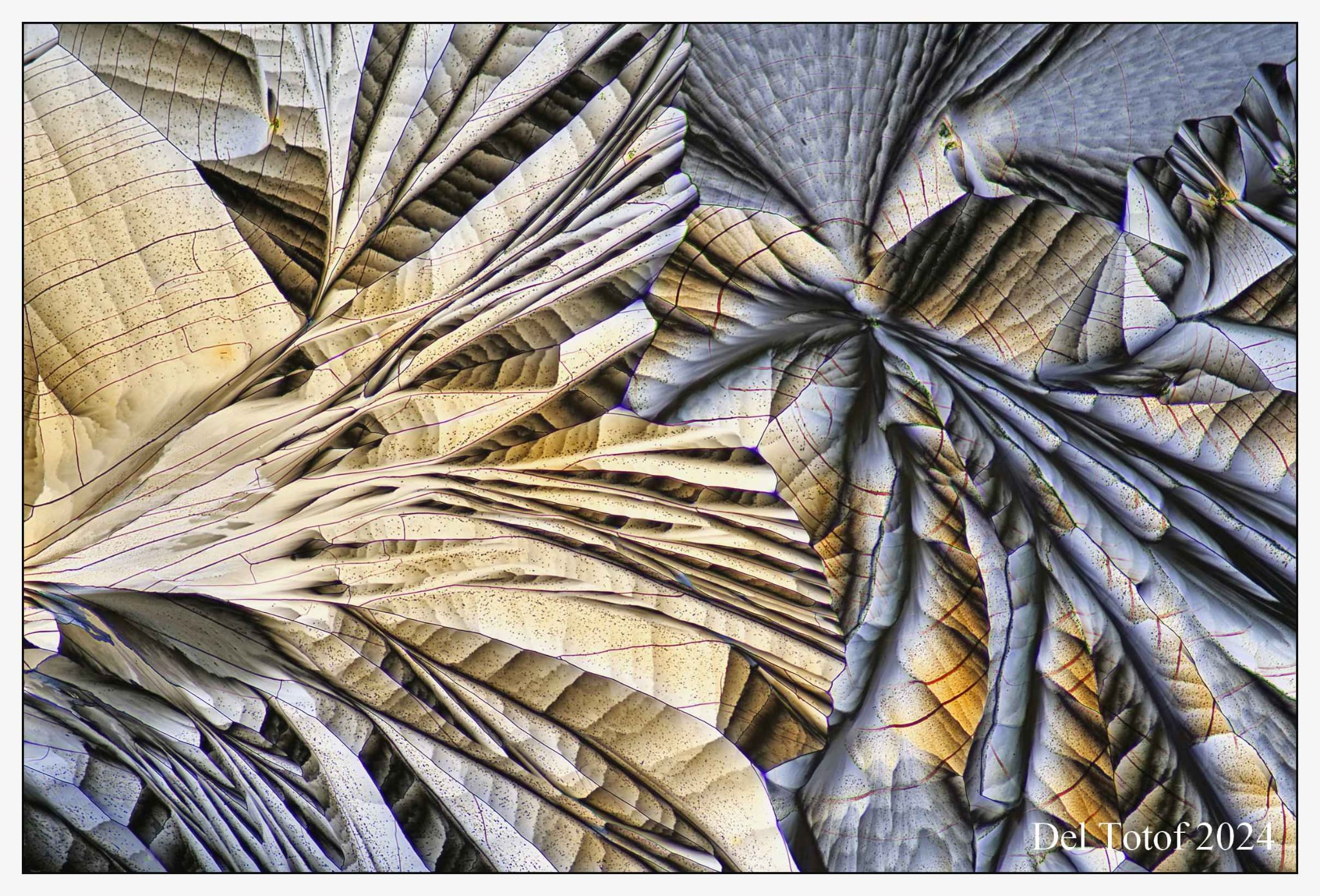
For best results, get filters with the highest extinction ratio you can find, and make sure they are linearly (rather than circular) polarized. This, plus a few cellophane sheets to function as wave retarders, can give amazing results when viewing crystal structures.
 Olympus BH-POL Kit
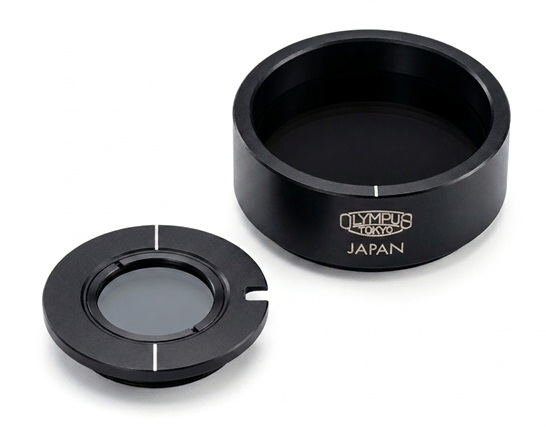
Olympus produced the BH-POL polarizing kit for the BH2, which is compatible with BHT and BHS scopes for simple qualitative polarizing work.
The BH-POL polarizing kit includes a linear polarizer that fits into the field lens recess below the condenser and a second linear polarizer that drops into the viewing head recess (before the viewing head is installed).
The BH-POL has no provision for the addition of a quarter wave or full wave plate to the optical path.
This kit is not compatible with BHSU or BHTU scopes, since the reverse-inclined nosepiece on these scopes contains an integral tube length reduction barrel that prevents the top polarizer from fitting into place.
 Olympus BH2-KP Kit
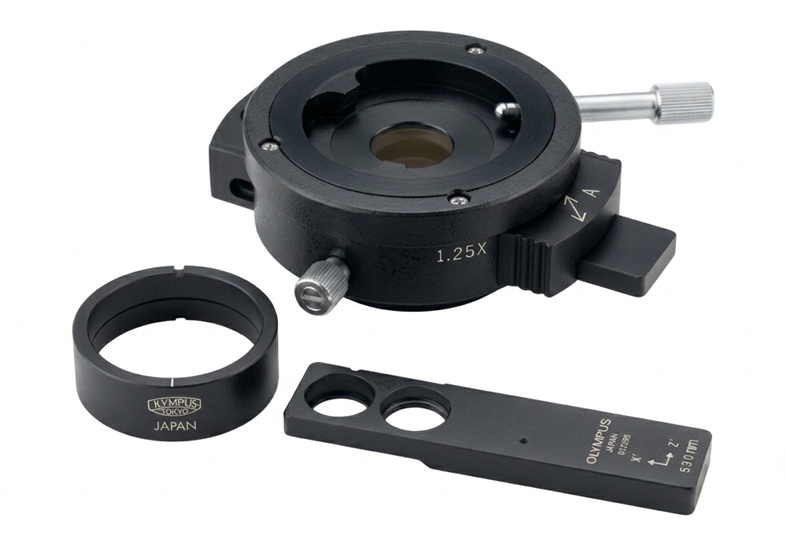
Next up in capability is the BH2-KP simple polarizing kit for the BH2, which is compatible with the BHT, BHTU, BHS, and BHSU scopes for simple qualitative polarizing work. The BH2-KPA includes a linear polarizer that fits into the field lens recess below the condenser and a simple polarizing intermediate tube with 1.25x magnification factor and an integral slide-in/out analyzer, along with a slot for a 20x6mm quarter-wave or full-wave plates.
BHSP and BHTP Stands
These next two options go a bit beyond “adding polarizing capability to the BH2”. Olympus made the BHTP and BHSP polarizing versions of the BH2, which were configured specifically for quantitative polarizing work. These scopes have significantly more polarizing capability than that which was supplied by the BH-POL or BH2-KPA qualitive kits, and tend to be very expensive when they show up on the used market.
At the lower end was the BHTP, which was essentially a BHT stand with polarizing components, and at the higher end was the BHSP, which was a BHS stand with polarizing components. Both polarizing stands included a BH2-POC polarizing condenser, a BH-PRE centering 4-position nosepiece, a BH2-PA polarizing intermediate tube, and either A PO or DPlan PO strain-free objectives.
The BHTP was supplied with the BH2-SRG circular rotating stage and integral 20W halogen lighting, while the BHSP was supplied with the BH2-SRP precision circular rotating stage and integral 100W halogen lighting. The BH2-PA intermediate tube features a focusable Bertrand lens, a slide-in/out 180-degree rotatable analyzer, and a 20x6mm slot for quarter-wave or full-wave plates, or for a Berek compensator.
Although both the BHTP and BHSP microscope stands were configured for polarizing microscopy, they are also well suited for biological applications, since these scopes maintain the same design modularity as the biological versions from which they were derived.
The BHTP can utilize any of the standard BH2 modular stages, condensers, and viewing heads. Similarly, the BHSP can utilize any of the standard BH2 modular condensers and viewing heads, plus the modular stages, if you replace the supplied BH2-SRP precision stage with a BH2-CH substage.
The BH2-PA intermediate tube can be removed, or the analyzer can simply be slid out of the optical path, to render this component optically neutral (the BH2-PA has a magnification factor of 1x).
The BH-PRE centering nosepiece with the A PO or DPlan PO objectives are suitable for biological work. If you require more than four objectives, you can replace the BH-PRE with the BH2-5RE (5-position) or BH2-6RE (6-position) nosepieces.
The BH2-POC polarizing condenser may be used for biological work, but it reduces the usable light by 50% due to the integral polarizer. If this is a problem, simply replace the BH2-POC with one of the other modular condensers in the BH2 line.