
Service and Repairs for BH2 Microscopes
Click here to learn how to get your BH2 repaired.
Click here for help on repairing your own BH2.
Click here to learn about JIS screws.
Click here to see a PDF of an Olympus repair manual that covers the BH2 microscope stands.
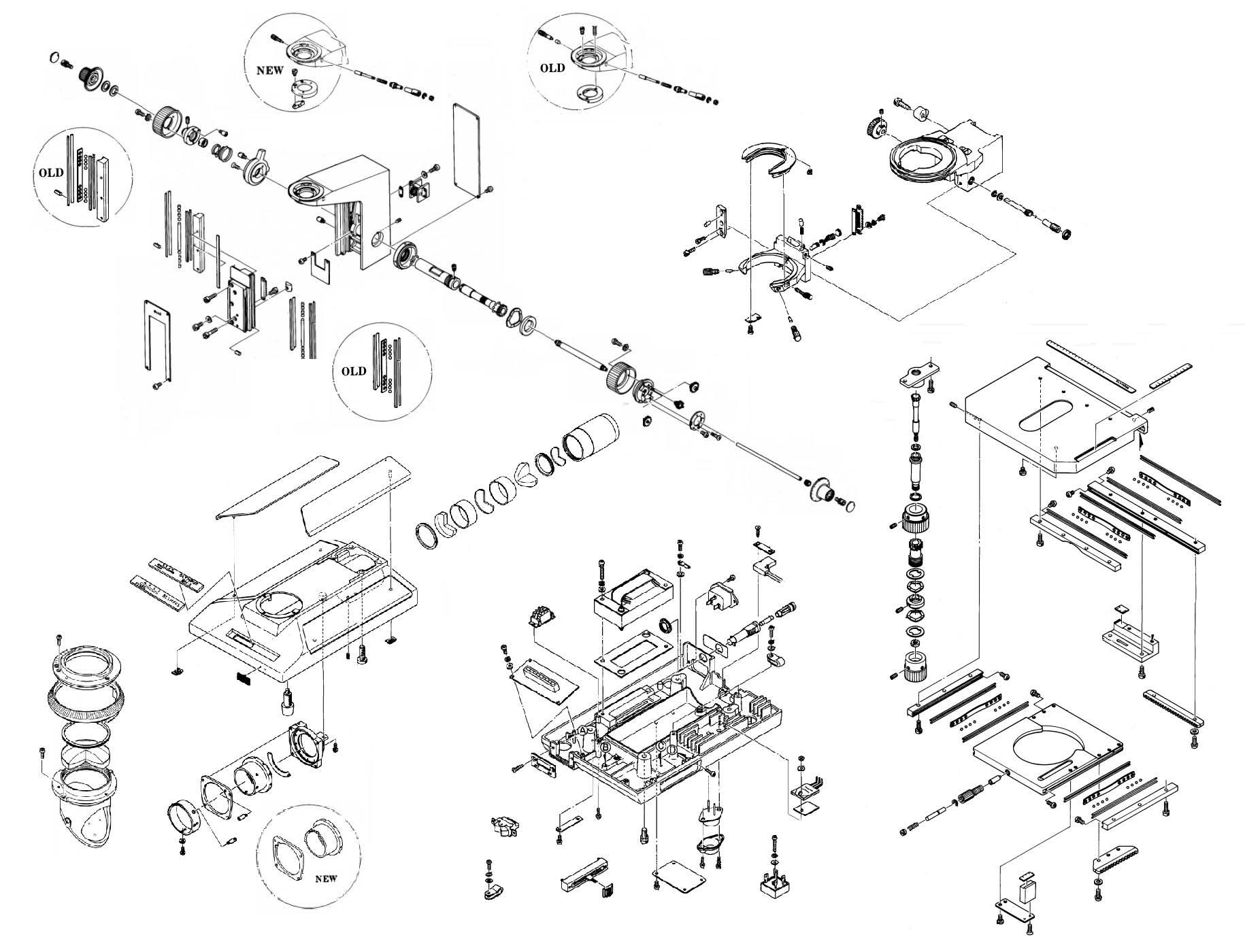
Service and Repairs for Olympus BH2 Microscopes
If, despite the resources available on this site, you do not feel qualified to undertake the servicing required to make your BH-2 a pleasure to use once again, please contact me. I do not want potential BH-2 owners to be discouraged from buying one of these scopes, just because they are not on a first-name basis with a screwdriver!
I have serviced BH-2 scopes for many hobbyists (at very low cost to them), as well as for professional microscopists. Plenty of people have sent their scopes (or parts thereof) to me for service, or had their ebay purchases directly shipped to me for service.
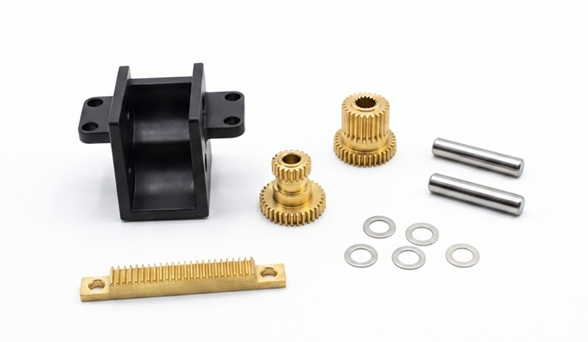
I recently serviced a BHS scope for a professional microscopist (author) who was complaining of terrible hysteresis in the fine focus. After he got his scope back, he told me that he didn’t realize how bad off his BHS was, until after I had serviced it.
When I tore his scope down, I found (as expected) that the elevation gearbox was nearly completely seized, and that the rest of the moving parts were not much better off. All of this was of course due to degradation of the grease in the focus mechanism and focus block. It had clearly been way more than eight years since this scope had been properly serviced! The dysfunction had slowly crept in, unnoticed by him, over the decades, until one day his trusty BHS become unusable. After the service, his scope was once again a pleasure to use.
Without a doubt, there is a night-and-day difference between a typical BH-2 scope that has not been serviced in many years, and that same scope after it has been completely disassembled, the old grease thoroughly removed, and the whole thing reassembled with fresh grease. You can rest assured that if your scope is serviced by the Empire of Dirt Workshop, this is the level of service you will receive.
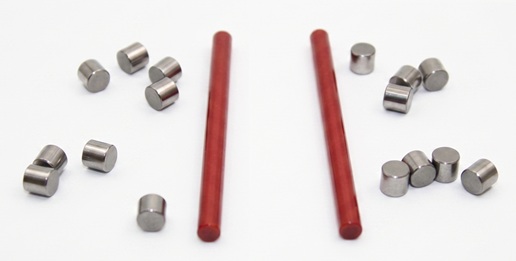
I don’t shoot Marvel Mystery Oil into the stiff parts and work it around to loosen it up (click here to see why). That is a temporary remedy, at best. At the end of the day, THIS IS A HOBBY FOR ME! Time is not money at the Empire of Dirt Workshop. I do this for enjoyment, and for the satisfaction of helping others.
If I spend six or eight hours hunched over the workbench in my basement hell-hole, making your scope a pleasure to use once again, that’s a fun weekend for me! That’s what I like to do. I do not do this to make money. Believe me when I tell you the “make-money” horse has left the barn long ago, and can never find its way back again.
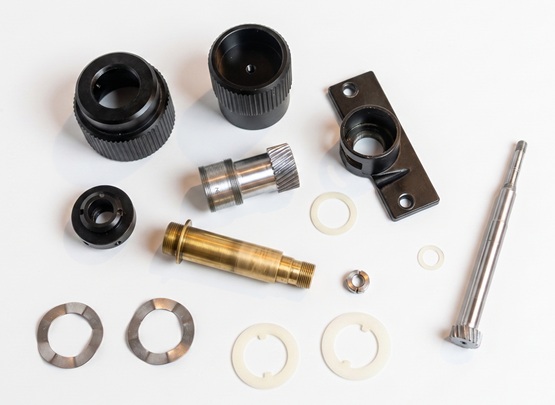
As an example. a complete service on a BHT/BHTU scope would include disassembly, cleaning, and reassembly with fresh grease of the following components:
- Coaxial Focus Mechanism
- Sliding Focus Block
- Substage Assembly
- Nosepiece Turret
- Electronics (re-cap and re-solder any fractured solder joints)
- Viewing Head (binocular or trinocular)
- Field Diaphragm (if necessary)
- DPlan, A, or E Objectives, clean the spring tips
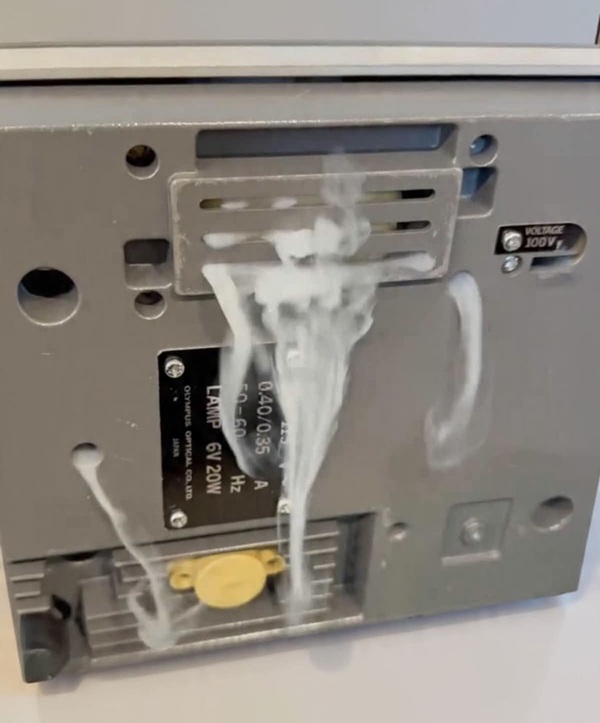
A BH2 Letting the Magic Smoke Out
Can You Help Me Service My Own BH2 Microscope?
There are a ton of resources on this site to help you repair your BH2. But if you plan on servicing your own Olympus BH2 scope, I can offer no better advice than to get yourself a good set of JIS-compatible screwdrivers. I cannot stress this enough! Most of the screws used in the BH2 scopes are either Allen-head or JIS-head screws. There are no plain old Phillips-head screws, but this fact is not at all obvious to the casual observer. Unless you look very closely, the two screw types appear the same. Click here to learn about the controversy of the Japanese JIS screw.