 BH2-BI30 Binocular Head
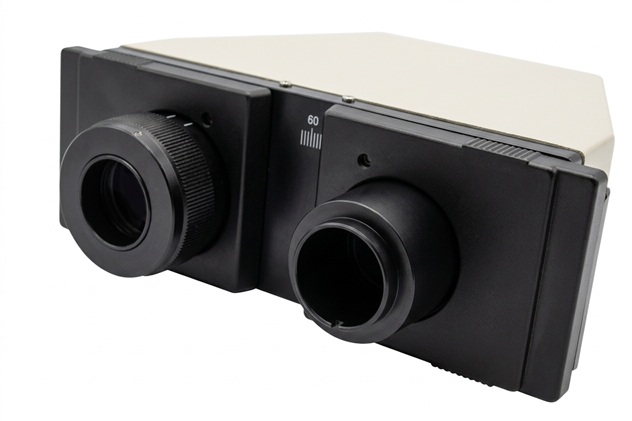
The BH2-BI30 (Olympus 3-LC405) is a Jentzsch style binocular head with automatic correction of optical tube length for all settings of inter-ocular distance.
This version accepts 23mm oculars, has a 30-degree inclination angle, a field number of 21, and has a diopter adjustment on the left eyepiece tube.
The right eyepiece tube includes a small notch on the bottom to hold reticle eyepieces in the proper orientation. The BH2-BI30 was standard on the various BH2 upright scopes, and may also be used on the IMT2 inverted scope.
Click here to see a PDF of the Olympus BH2-BI30 repair manual.
Click here to see the Empire of Dirt Workshop PDF repair guide for the BH2-BI30.
 BH2-BI45 Binocular Head
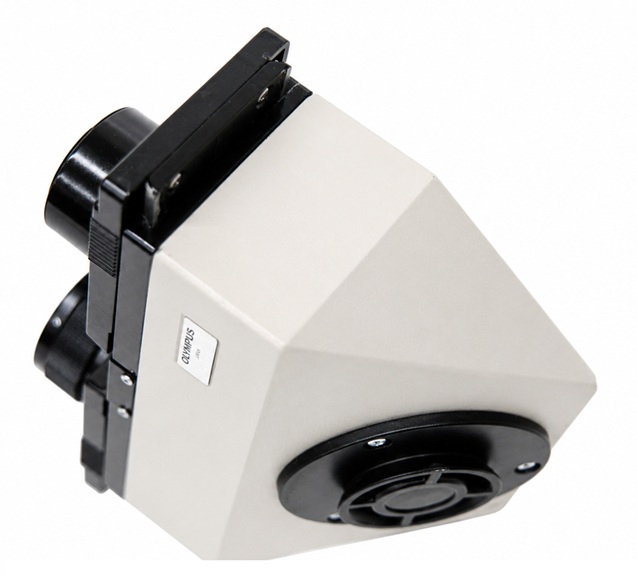
The BH2-BI45 (Olympus 3-LC404) is a Jentzsch style binocular head with automatic correction of optical tube length for all settings of inter-ocular distance.
This version accepts 23mm oculars, has a 45-degree inclination angle, a field number of 21, and has a diopter adjustment on the left eyepiece tube.
The right eyepiece tube includes a small notch on the bottom to hold reticle eyepieces in the proper orientation.
The BH2-BI45 was standard on the IMT2 inverted scope, and may also be used on any of the BH2 upright scopes.
 BH2-SWBI30 Binocular Head
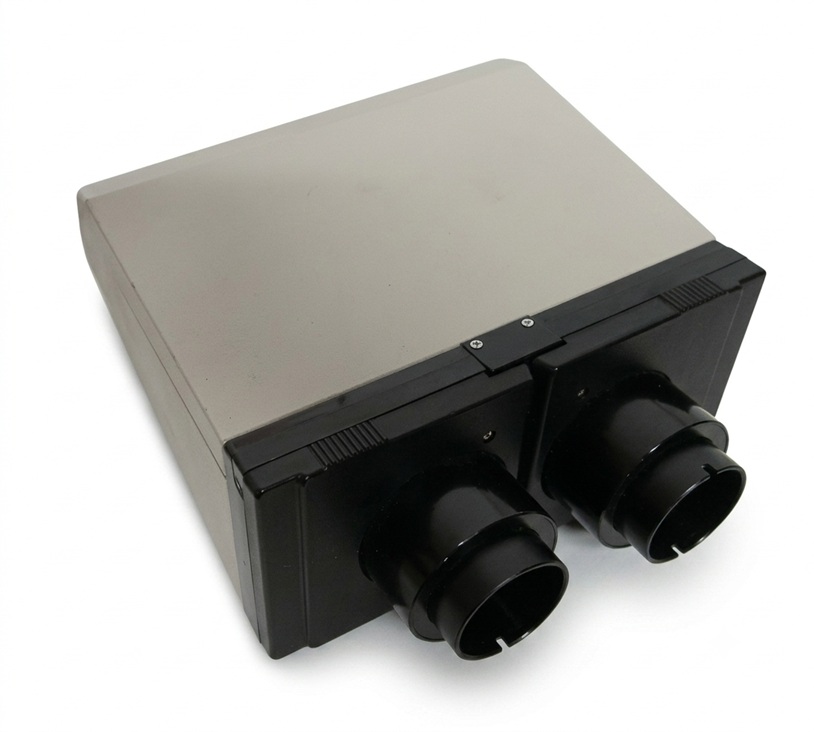
The BH2-SWBI30 is a Jentzsch style binocular head with automatic correction of optical tube length for all settings of inter-ocular distance.
This version accepts 30mm oculars, has a 30-degree inclination angle, a field number of 26.5, and has no diopter adjustments on either eyepiece tube (the 30mm eyepieces contain diopter adjustments).
The left and right eyepiece tubes include a small notch on the bottom to hold reticle eyepieces in the proper orientation. The BH2-SWBI30 provides a super-wide visual field when used with SPlan objective lenses.
This viewing head may be used on the IMT2 inverted scope or any of the BH2 upright scopes.
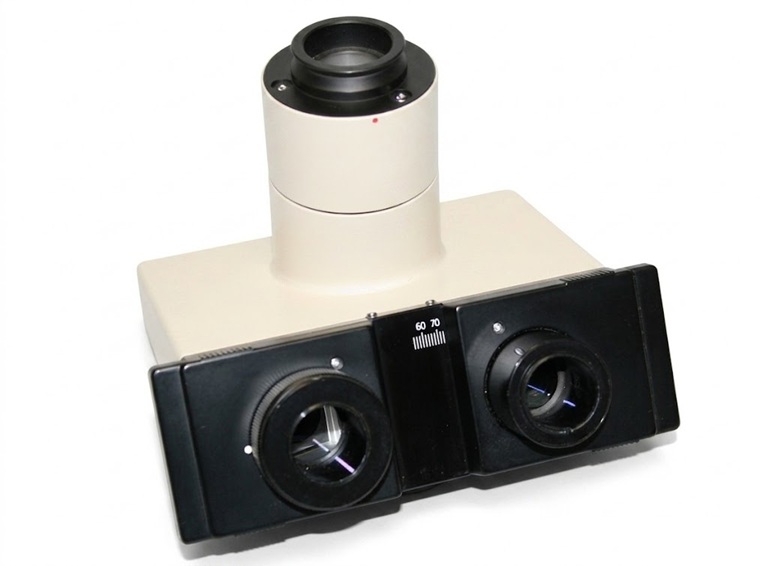 BH2-TR30 Trinocular Head
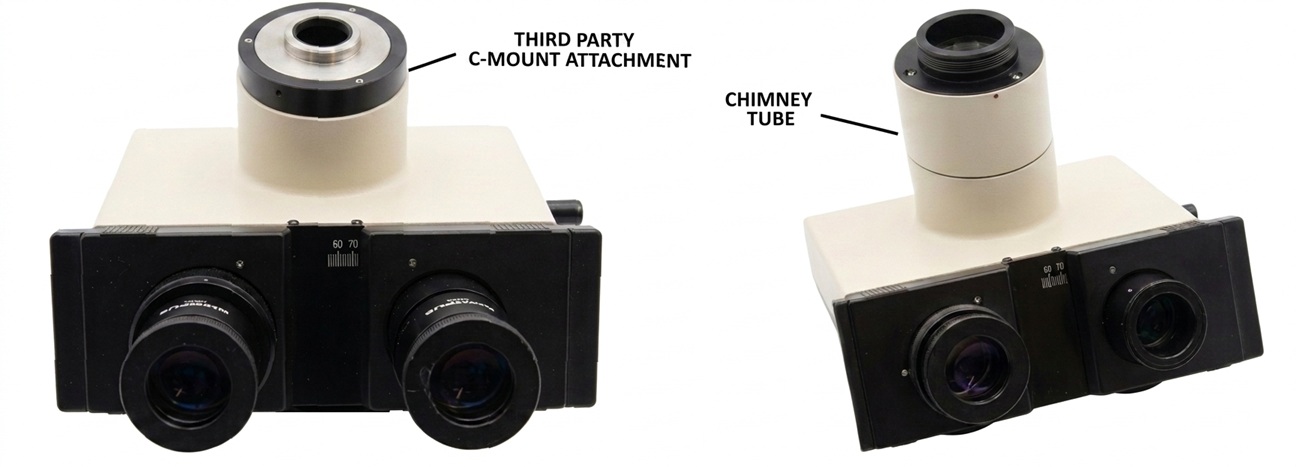
The BH2-TR30 (Olympus 3-LC553) is a Jentzsch style trinocular head with automatic correction of optical tube length for all settings of inter-ocular distance.
This version accepts 23mm oculars, has a 30-degree inclination angle, a field number of 21, and has a diopter adjustment on the left eyepiece tube. The right eyepiece tube includes a small notch on the bottom to hold reticle eyepieces in the proper orientation.
The BH2-TR30 includes a 3-position diverter shaft on the right–hand side to control the split of light between the binocular eyepieces and the camera port (the light can be split between the eyepieces and the camera port in a 100/0, 80/20, or 0/100 relationship).
This viewing head may be used on the IMT2 inverted scope or any of the BH2 upright scopes.
Click here to see how to repair the BH2-TR30.
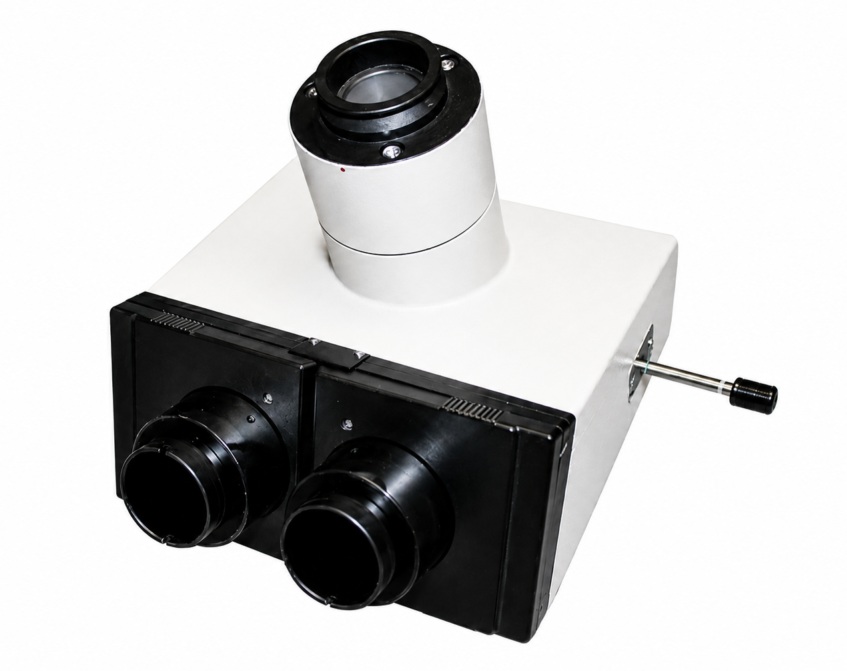 BH2-SWTR30 Trinocular Head
The BH2-SWTR30 is a Jentzsch style trinocular head with automatic correction of optical tube length for all settings of inter-ocular distance.
This version accepts 30mm oculars, has a 30-degree inclination angle, a field number of 26.5, and has no diopter adjustments on either eyepiece tube (the 30mm eyepieces contain diopter adjustments). The left and right eyepiece tubes include a small notch on the bottom to hold reticle eyepieces in the proper orientation.
The BH2-SWTR30 includes a 3-position diverter shaft on the right-hand side, to control the split of light between the binocular eyepieces and the camera port (the light can be split between the eyepieces and the camera port in a 100/0, 80/20, or 0/100 relationship).
The BH2-SWTR30 provides a super-wide visual field when used with SPlan objective lenses. Although the eyepieces provide a super-wide field number, the camera port on the BH2-SWTR30 does not provide additional field coverage.
This viewing head may be used on the IMT2 inverted scope or any of the BH2 upright scopes.
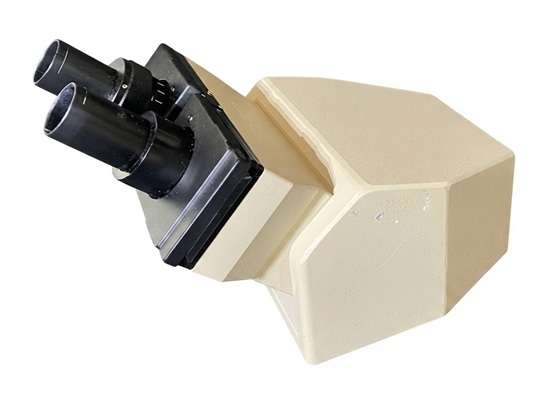 BH2-TBI Tilting Binocular Head
The BH2-TBI tilting binocular viewing head (Olympus 3-LC406) uses a 23mm Jentzsch style binocular mechanism similar to that used in the BH2-BI30 binocular viewing head. The BH2-TBI has an adjustable inclination angle of 0 to 45 degrees, a diopter adjustment on the left eyepiece tube, and provides a field number of 21.
This viewing head may be used on the IMT2 inverted scope or any of the BH2 upright scopes.
Click here to see an Olympus memo describing alignment of the BH2-TBI.
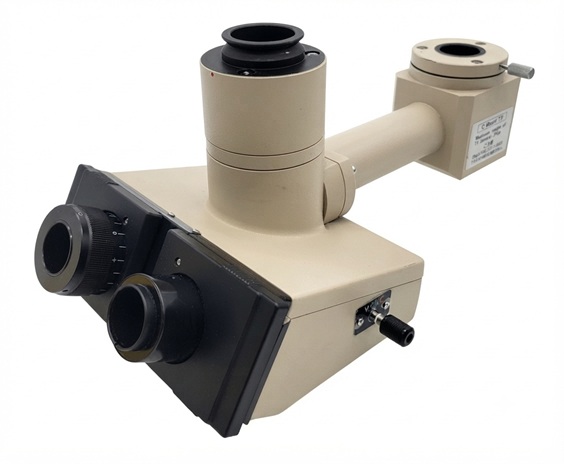 BH2-TET Trinocular Head
[insert complete description here]
The BH2-TET has a 30-degree inclination angle, a diopter adjustment on the left eyepiece tube, and provides a field number of 21.
Click here to open the Olympus BH2-TET repair manual in a separate window.
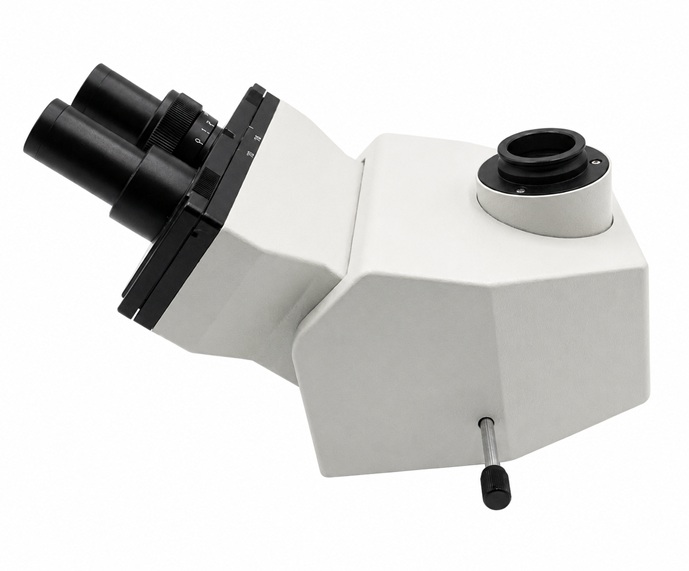 BH2-TTR Tilting Trinocular Head
The BH2-TTR tilting trinocular viewing head (Olympus 3-LC407) uses a 23mm Jentzsch style binocular mechanism similar to that used in the BH2-BI30 binocular viewing head. The BH2-TTR has an adjustable inclination angle of 0 to 45 degrees, a diopter adjustment on the left eyepiece tube, and provides a field number of 21.
The BH2-TTR includes a 3-position diverter shaft on the right-hand side, to control the split of light between the binocular eyepieces and the camera port (the light can be split between the eyepieces and the camera port in a 100/0, 80/20, or 0/100 relationship).
This viewing head may be used on the IMT2 inverted scope or any of the BH2 upright scopes.
Click here to see a PDF of an Olympus memo describing alignment of the BH2-TBI.
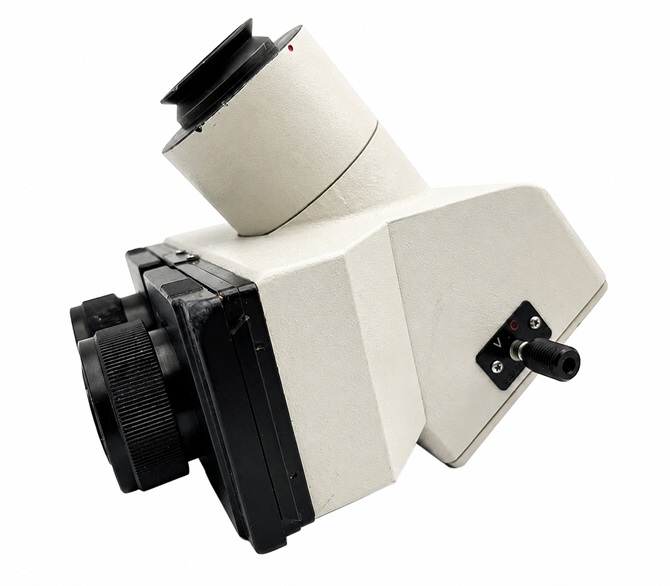 BH2-SMT Erect Binocular Head
The BH2-SMT uses a Jentzsch style binocular viewing head similar to that used in the BH20BI30. The BH2-SMT provides optically erected imaging.
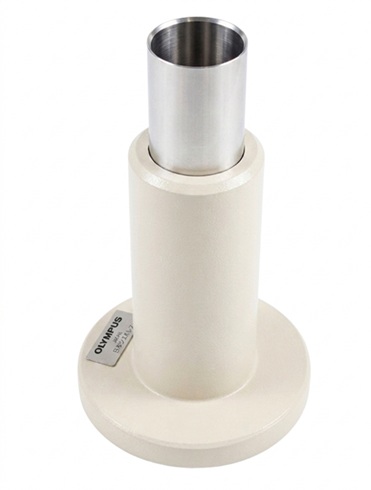 BH2-PT Monocular Tube
The BH2-PT monocular phototube (Olympus 3-LC151) can be used on the IMT2 inverted scope or on any of the upright scopes in the BH2 line, to replace the viewing head and to attach either an eyepiece or a camera (using the PM-ADF eyepiece adapter).
The BH2-PT, which features a 23mm ocular tube compatible with the various BH2 eyepieces, contains no optics whatsoever and provides a field number of 21. See the warning below before purchasing a BH2-PT.
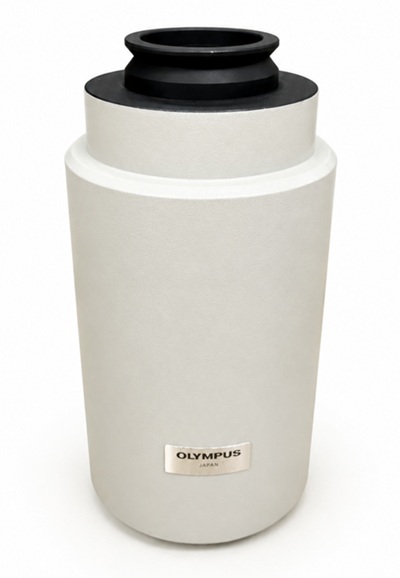 IMT2-PT Photo Tube
The IMT2-PT monocular phototube can be used on the IMT2 inverted scope or on any of the upright scopes in the BH2 line, to replace the viewing head and to attach a camera (using a suitable adapter).
The IMT2-PT, which features the same 38mm NFK dovetail mount as found on the BH2 trinocular heads, contains no optics whatsoever, and provides a field number of 21.
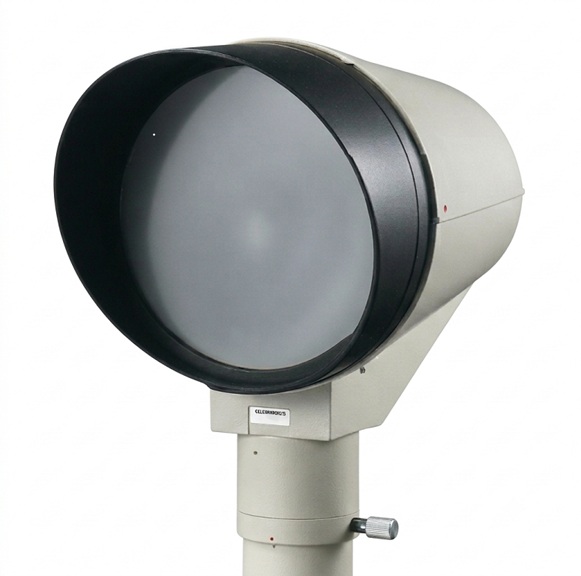 AH-MPS-W Right-Angle Projection Screen
The AH-MPS-W is a cream colored projection screen for the BH2, which uses an NFK photo eyepiece and contains an integral 90-degree prism to project an image onto a 155mm viewing screen.
The magnification of the projected image is equal to the objective magnification multiplied by three times the NFK magnification. These projection screens are quite rare.
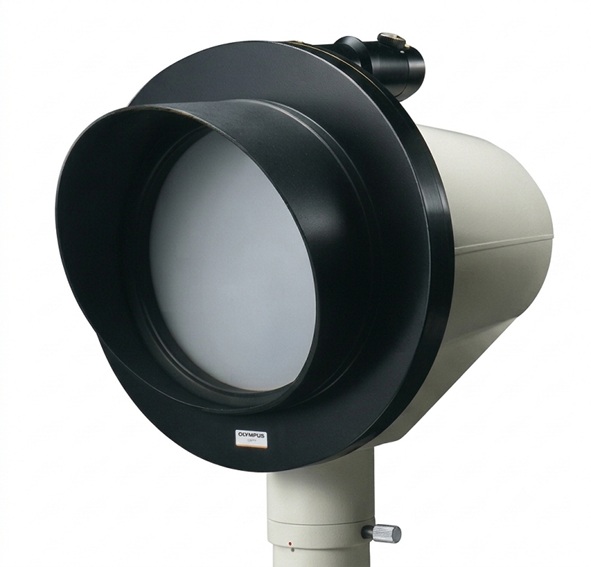 AH-SPS-W Right-Angle High-Resolution Projection Screen
The AH-SPS-W is a cream colored projection screen for the BH2, which uses an NFK photo eyepiece and contains an internal 90-degree prism to project an image onto a 155mm viewing screen.
The magnification of the projected image is equal to the objective magnification multiplied by three times the NFK magnification.
The AH-SPS-W is similar to the AH-MPS-W, but provides a higher resolution image on the viewing screen. These projection screens are quite rare.
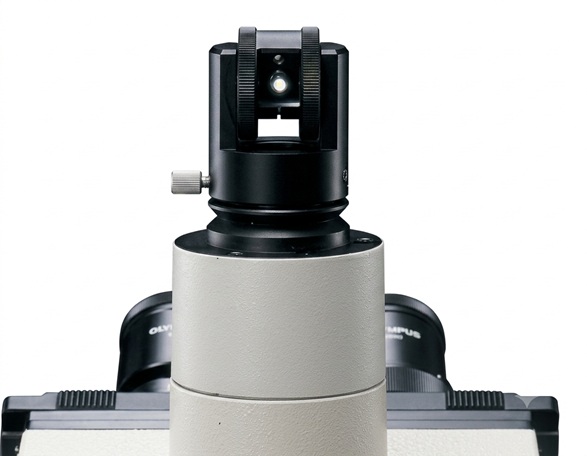 ABH2-WP Wall Projection Prism
The BH-WP is a 90-degree projection prism for the BH2, which projects an image onto a suitable white wall or screen. These projection prisms are quite rare.