Which BH2 Should I Buy?
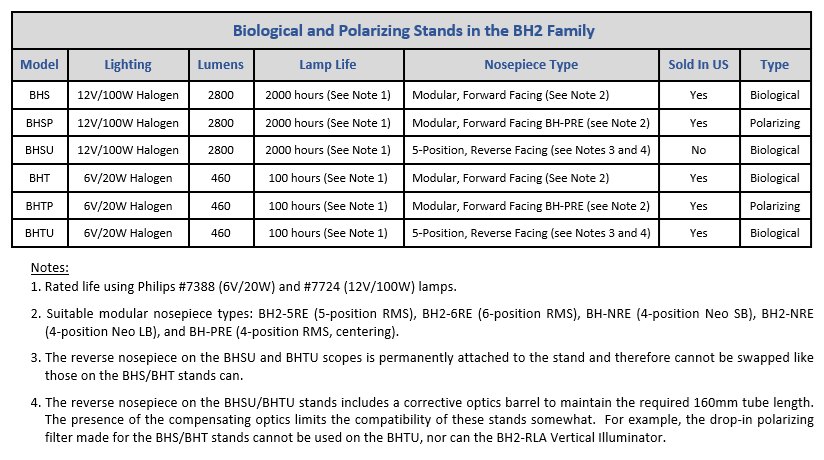
So, which scope BH2 should you buy? Like many questions in life, the answer is “it all depends.” Specifically, it depends on what you expect from your microscope, and in no small way it also depends on what type of a microscopist you are. For a biological microscope, your choices in the Olympus BH2 line are the BHS, BHT, BHSU, and BHTU scopes.
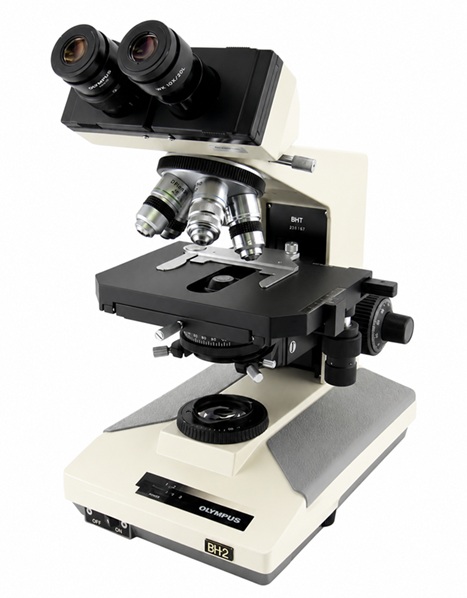
If you are buying a BH2 because you want a good, solid, well-performing clinical microscope on your bench for brightfield, darkfield, Rheinberg, and maybe even phase contrast or polarizing observations, then a BHT or BHTU with its 20W halogen lighting would be a great choice for you. These are nice, full-sized scopes which were designed to provide great performance and were built to last. The 20W models utilize relatively simple electronics that you can expect to maintain and use for a long time. The BHTU utilizes a reverse-inclined nosepiece, which puts the objective in use up-front and center, with the other objectives pointing back away from the operator. This arrangement leaves tons of room for the operator to access the specimen on the stage and is therefore the best choice for oil-immersion microscopy, and any other techniques where physical access to the specimen on the stage is needed.
In contrast, the objective lens in use on the BHT (with its conventional forward-facing nosepiece) is at the back, with the unused objectives facing forward, obscuring access to the specimen. For some, this difference is not a big deal. But for many, the improved ergonomics of the BHTU are a must-have (i.e., pathology / cytology). The relative sales numbers of the BHT and BHTU speak for themselves in this regard. The BHTU, with its improved ergonomics, was generally seen as the more desirable option and therefore handily outsold the BHT. However, things are a bit flipped now. You should expect to pay more for a BHT in the used market, over a comparably equipped BHTU, due to the relative scarcity of BHT scopes.
Before you make your final decision, keep in mind that the reverse-inclined nosepiece of the BHTU, as popular as it was, does come with some minor trade-offs. The nosepiece on the BHTU is permanently attached to the microscope stand, and to swap objectives you must unscrew and remove the existing objectives, and then screw in the new ones you wish to use. “Like, isn’t that how microscopes work?” Not always. The BHS and BHT scopes utilize a modular nosepiece that can be easily removed with the objectives in place and replaced with another nosepiece already loaded with a totally new lineup of objectives. So, if you think you will be swapping out the entire set of objectives frequently (in practice, people rarely do this), then the BHS or BHT may be the better choice for you. You may think that nosepiece modularity is a clear advantage for the BHT, but keep in mind that this second nosepiece with its full boat of premium objectives will likely cost you much more than you paid for your entire BHT scope. You should carefully consider whether or not you would ever really use this feature, and weigh this against the improved ergonomics of the BHTU.
An additional factor to consider when making your decision as to which microscope to buy is that, because the physical recess where the viewing head mounts onto the BHTU stand contains an optical lens assembly which is not present on the BHT scopes (this lens assembly was needed to allow the reverse-inclined nosepiece to work on the BH2 stand), a few accessories for the BH2 line are not compatible with the BHTU, since they would physically interfere with this lens assembly. Specifically, there was a small drop-in polarizing filter/analyzer, as well as a brightfield/darkfield vertical illuminator for reflected-light viewing (the BH2-RLA), that won’t fit the BHTU. The issue with the drop-in polarizer is not a big deal, as there was a BH2-KPA Simple Polarizing Kit offered by Olympus that is a better way to add simple polarizing capabilities to your microscope than the drop-in filter, and this kit is 100% compatible with the BHTU. Failing this, a simple piece of linear polarizing film could be trimmed with scissors to fit the recess of the BHTU. Don’t let the lack of compatibility with a stupid little polarizing filter dissuade you from the BHTU, if you like the idea of the reverse nosepiece.
As for the BH2-RLA vertical illuminator, unless you have a strong interest in metallurgical microscopy (and most amateur microscopists do not), you will likely never miss the inability to utilize this particular vertical illuminator on your BHTU stand. The various brightfield vertical illuminators for the BH2 line can be used on the BHTU.
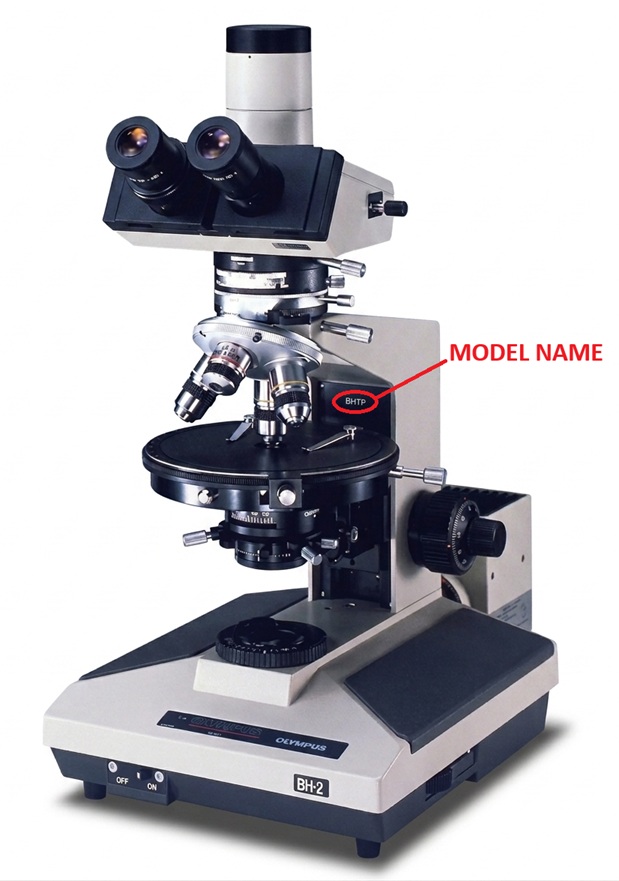
So, enough about the BHT and BHTU scopes, what about the BHS scope? At first glance, and from a bit of a distance, the BHS looks just like a BHT scope. In fact, from the knees up, the two scopes are essentially identical, and they share the same design modularity. It’s below the knees where the crucial differences can be found. Upon closer inspection, you’ll see that the BHS has a much wider base than the BHT, and a much larger lamphouse attached to the back. The wider base of the BHS contains beefier electronics, and the larger lamphouse contains a brighter halogen lamp, both of which exist to provide 100W (!) of halogen lighting. When a BHS is turned up to 11 (you had to know there would be a Spinal Tap reference in here someplace, right?), there is enough sheer lighting intensity to all but obliterate the retinas of any who may innocently peek into the eyepieces. It is as bright as the sun, and to many of the microscope freaks in the crowd, that’s just perfect!
Practically speaking, for the majority of users and for the majority of applications, the 20W of a BHT or BHTU is absolutely fine. But for the rest, there is the BHS. To be fair, there are legitimate reasons for a microscope to utilize 100W halogen lighting, but most amateur microscopists on a finite budget will never require this level of lighting intensity. When new, BHS scopes sold for quite a bit more than the BHT and BHTU scopes, and this still holds true for their pricing on the used market. BHS scopes have a much larger footprint on the bench, generate far more heat, and utilize more complicated electronics for which replacement parts can be difficult to find. For these reasons, I don’t usually recommend a BHS scope for most new users. Why waste the additional money and sacrifice all that desk space for a scope that will make you pay through the nose when the electronics require servicing or replacement, and which offers little in tangible benefits in exchange?
I should briefly mention the BHSU here. This scope is essentially a BHS scope with the non-modular, reverse-inclined nosepiece of a BHTU. The BHSU was never really sold in the United States and doesn’t seem to have sold very well elsewhere. There are a few BHSU scopes out there, but they are quite rare. If you’re hellbent on having such a scope, it is a simple manner to make your own from a BHS stand and a BHTU stand. You start out with a BHS stand and a BHTU stand, do some simple parts swappery, and you end up with what is essentially a BHSU stand and a BHT stand.
So, having discussed the advantages and disadvantages of the various BH2 models, it’s now time to look deep inside yourself to determine what type of a microscopist you are. To many people, a microscope is a tool that allows them to look at the microscopic world, and so long as their microscope performs this function well, they will be happy with their microscope. At the other end of the spectrum are people to whom the microscope is a wonder of mechanical engineering and a thing of beauty, and the hardware itself is their primary source of satisfaction, not the things that they can do with these scopes.
For these people at the far end of the microscope spectrum, observing the microscopic world is just a small part of their enjoyment of the hobby. These people tend to be extreme gadget freaks who want all of the high-dollar, top-of-the-line hardware that they can get their hands on. They will collect all the various bits and bobs that were made for their scopes and are always on a quest to upgrade. Money is of course no object to them. These people might spend more on a single apochromatic objective than the average hobbyist has invested in their entire system. They likely have several different microscopes (OK, let’s be honest, they have a lot of microscopes) made by the Big Four manufacturers. Those who are truly sick may even have a dedicated microscope workshop in their basement (looking around and avoiding eye contact).
For these people, a simple BHT or BHTU alone would never be sufficient. Don’t get me wrong, they will have one or two of these in their collection, but they will also have countless other scopes, often from various manufacturers, in their line-up. For these people, there is no such thing as enough, and there is sadly no cure for their affliction.

 BHT
BHT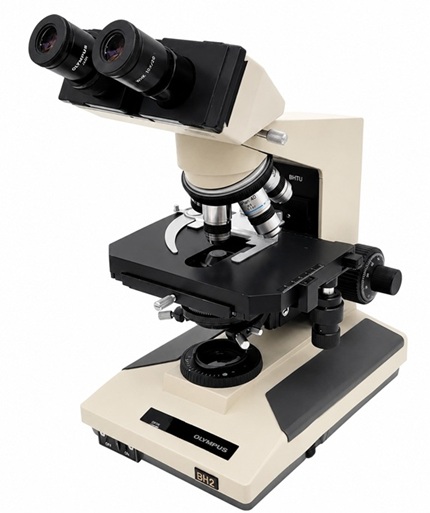 BHTU
BHTU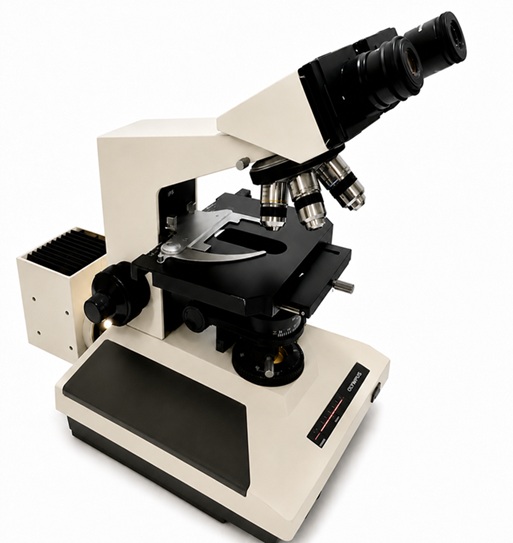 BHS
BHS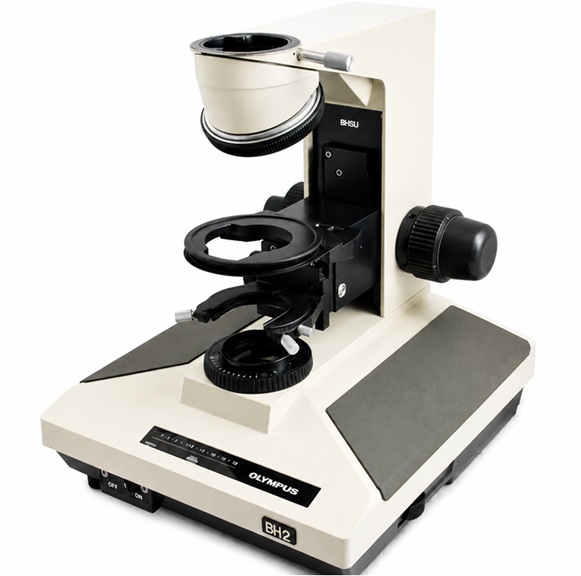 BHSU
BHSU