 BH2-CD Condenser
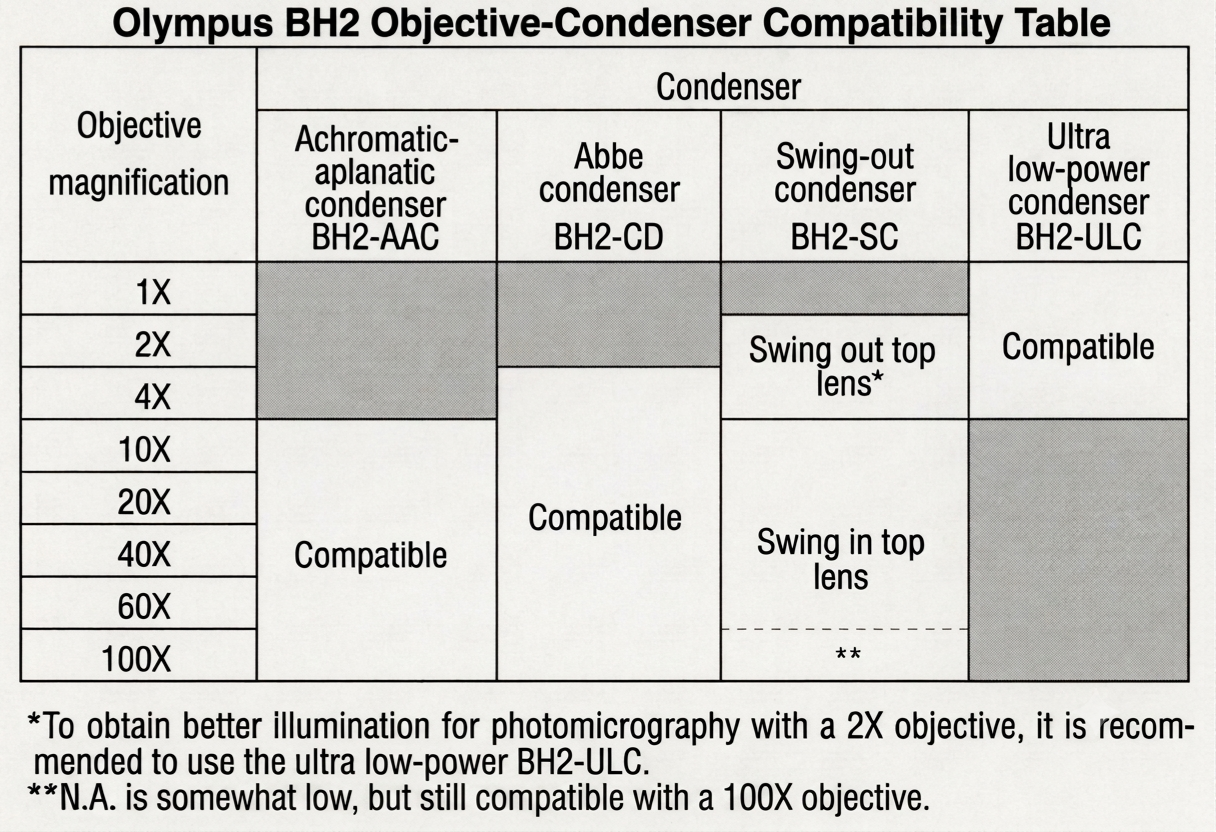
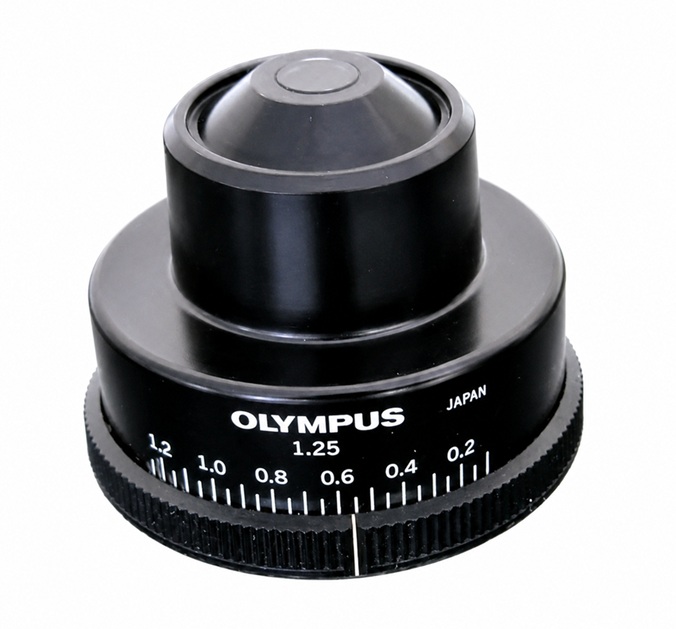
The BH2-CD condenser (Olympus 6-LB150) is a standard oil-immersion Abbe condensed comprised of two elements in two groups, with a maximum numerical aperture of 1.25 (when oiled to the bottom of the slide) and a focal length of 13.4mm. This condenser is best suited for usage with the E, A, DPlan, and SPlan achromatic LB objectives. The field coverage of the BH2-CD is suitable for use with 10X through 100x SPlan objectives or 4x through 100x E, A, or DPlan objectives. Although the basic Abbe condenser does not contain corrections for optical aberrations, the Abbe remains the standard condenser for routine microscopy, and for general-purpose applications the BH2-CD Abbe condenser will be your lowest-cost option.
There were inserts available for the BH2-CD which allowed simple darkfield (BH2-KDC), and phase contrast at 10x, 20x, and 40x (BH2-PC10RS, BH2-PC20RS, and BH2-PC40RS), but these are fairly rare and difficult to find. Additionally, there was a white cap made for the BH2-CD, for improved specimen visibility.
The optically similar U-AC2 Abbe condenser (Olympus 6-U1112) made for the BX microscope series can be used in the place of the BH2-CD, but it has a slightly lower maximum numerical aperture (NA 1.1) than the BH2-CD.
 BH2-AAC Condenser
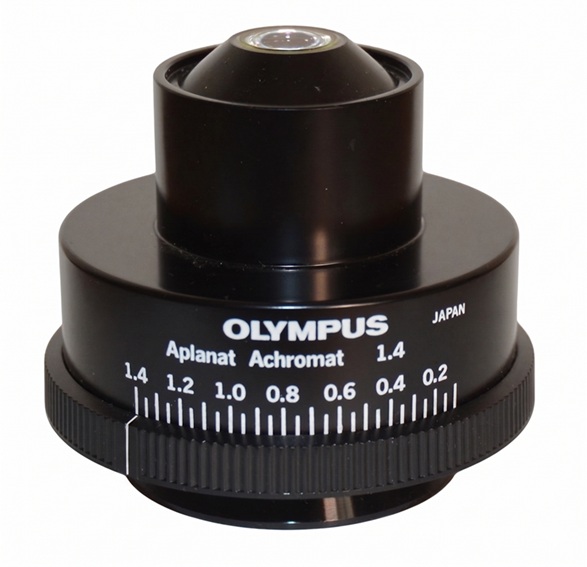
The BH2-AAC condenser is an aplanatic / achromatic oil-immersion condenser comprised of seven elements in four groups, with a maximum numerical aperture of 1.40 (when oiled to the slide) and a focal length of 9mm.
The aplanatic / achromatic design of the BH2-AAC provides optical corrections far above that of a standard Abbe condenser, making it appropriate for use with the higher performance fluorite and apochromatic objectives in the LB family.
The field coverage of the BH2-AAC is suitable for usage with 10X through 100X SPlan LB objectives, but is not sufficient for 4X or lower objectives. Because of this, it is best to have the BH2-AAC as a secondary condenser, rather than as your only condenser.
While not as common as the BH2-CD, the BH2-AAC is by no means rare, although it is significantly more expensive than either the BH2-CD or the BH2-SC condensers. An aplanatic / achromatic condenser with NA 1.4 is required to coax that last bit of resolving power and crispness out of those high-performance apochromatic objectives. The optically similar U-AAC condenser (Olympus 6-U130) made for the BX microscope series can be used in place of the BH2-AAC.
 BH2-PC and BH2-PCD Condensers
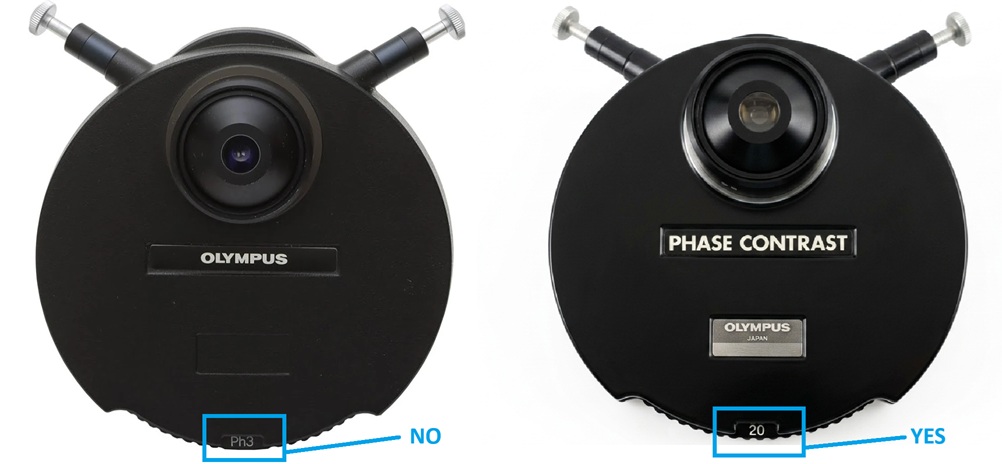
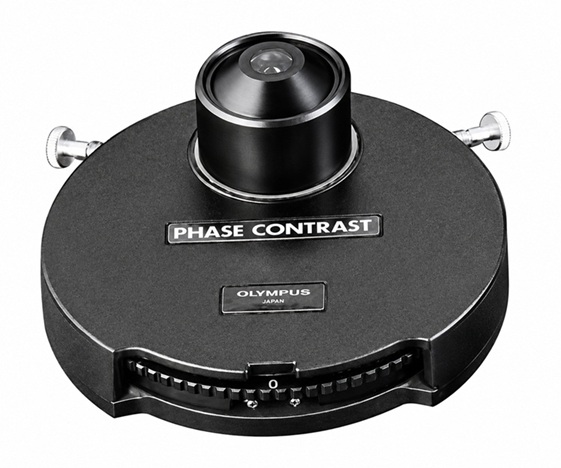
The BH2-PC (Olympus 6-LP151A) and BH2-PCD (6-LB152A) condensers are oil-immersion, Zernike-style phase contrast condensers. The BH2-PC and BH2-PCD condensers feature standard Abbe optics, with a maximum numerical aperture of 1.25 (when oiled to the slide) and a focal length of 13.4mm.
Both condensers will provide similar brightfield performance to the BH2-CD. The BH2-PC contains phase annuli for 10x, 20x, 40x, and 100x LB phase contrast objectives, as well as a normal brightfield setting. The BH2-PCD omits the 20x annulus, to allow for the inclusion of a simple low-power darkfield stop.
I always recommend the BH2-PC over the BH2-PCD version. Why hobble your phase contrast capabilities for a simple darkfield stop, when a darkfield stop can be easily added to the BH2-CD or BH2-AAC condensers? Both of these condensers were supplied with the Olympus 43-IF550-W45 green interference filter.
 BH2-ULC Condenser
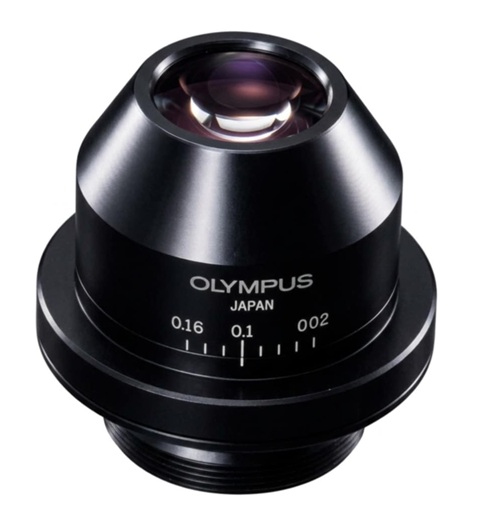
The BH2-ULC is a dry condenser comprised of three elements in three groups, with a maximum numerical aperture of 0.16 and a focal length of 67.4mm.
The BH2-ULC is suitable for usage only with low-power objectives, providing sufficient NA and field coverage for 1x through 4x LB objectives.
It is important to note that to prevent damage to the condenser, the BH2-ULC must never be used with oil immersion to the slide! The U-ULC2 condenser from the BX series can be used in place of the BH2-ULC.
 BH2-LWCD Condenser
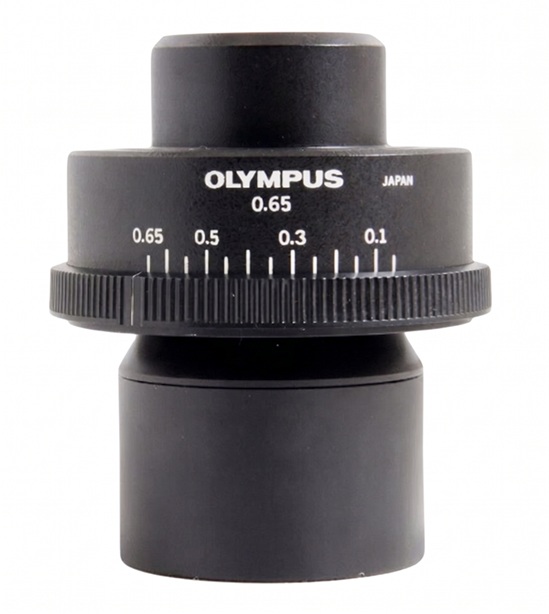
The BH2-LWCD is a long working distance condenser suitable for usage with the NHS-SIC Large Mechanical Stage for semiconductor applications.
This condenser has a maximum numerical aperture of 0.65.
The optically similar U-LWCD condenser from the BX series can be used in place of the BH2-ULCD.
 BH2-UCD Condenser
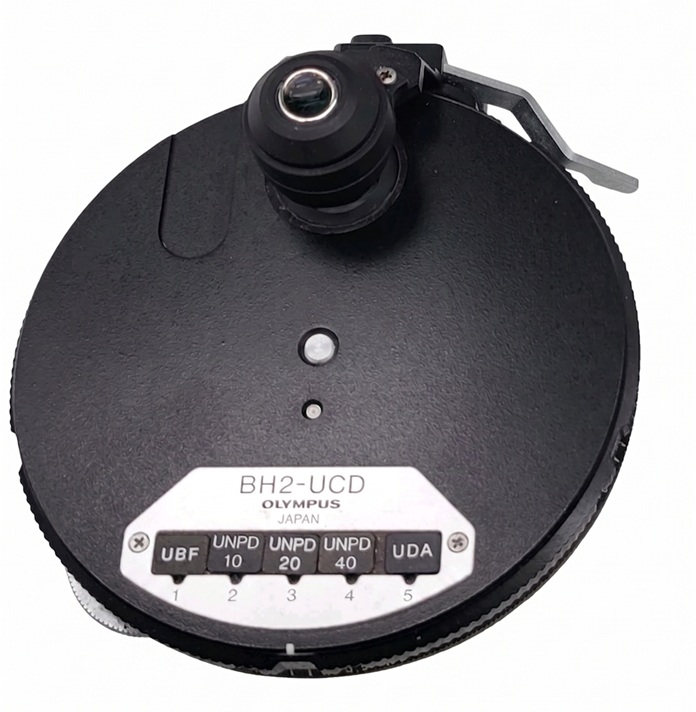
The BH2-UCD is a dry aplanatic / achromatic “universal” condenser with a “swingable” top element which may be swung into or out of the optical path to accommodate a wider range of field coverage than condensers with fixed top elements.
When the top element is swing into the optical path, the maximum numerical aperture is 0.9, the focal length is 13.1mm, the working distance is 1.5mm, and the field coverage is suitable for usage with 10x through 100x objectives. When the top element is swung out of the optical path, the maximum numerical aperture if 0.2, the focal length is 229mm, and the field coverage is suitable for usage with 2x through 4x objectives.
The BH2-UCD natively supports brightfield and polarized microscopy, and with easily replaced optical inserts, also supports darkfield, phase contrast, and Nomarski DIC.
For darkfield, the BH2-UDA darkfield insert is required.
For phase contrast, the BH2-URS10 (B-L0609), BH2-URS20 (B-L0610), BH2-URS40 (B-L0611), and BH2-URS100 (B-L0612) phase annulus inserts are required.
For Nomarski with SPlan objectives, the BH2-UNP10 (B-L0600), BH2-UNP20 (B-L0601), BH2-UNP40 (B-L0602), BH2-UNP60 oil (B-L0604), and BH2-UNP100 (B-L0603) Nomarski inserts are required.
For Nomarski with DPlan objectives, the BH2-UNPD10 (B-L0605), BH2-UNPD20 (B-L0606), BH2-UNPD40 (B-L0608), and BH2-UNPD40 oil (B-L0607) Nomarski inserts are required.
The BH2-UCD also contains an integral linear polarizer which can be rotated through the full 360 degree range. With the proper optical elements installed (there are 5 slots available), the BH2-UCD will support 10x, 20x, 40x, 60x, and 100 x phase contrast, 10x, 20x, 40x, 60x, and 100x Nomarski DIC, and 10x and 20x darkfield.
The iris diaphragm of the BH2-UCD functions as the field diaphragm for Köhler, Illumination whenever the top lens is swung out for low-power operation.
It is important to note that to prevent damage to the condenser, the BH2-UCD must never be used with oil immersion to the slide!
Click here to see a PDF of the Olympus BH2-UCD repair manual.
 BH2-NC Condenser
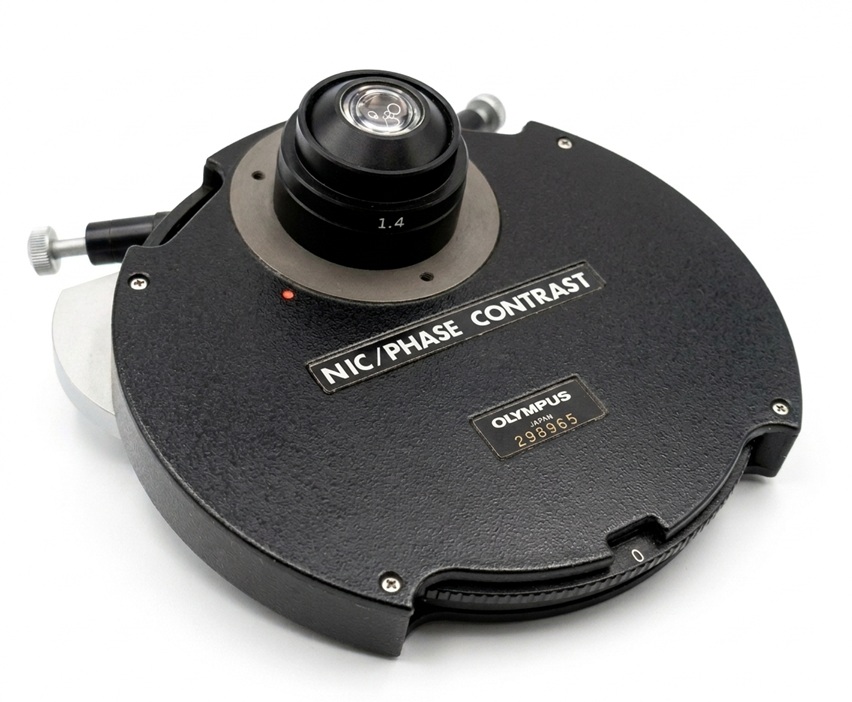
The BH2-NC is a Zernike-style, oil-immersion, aplanatic / achromatic condenser which supports brightfield, phase contrast, and Nomarski DIC. The BH2-NC has a maximum numerical aperture of 1.40, a focal length of 10mm, and contains a rotatable sliding polarizer (with an auxiliary clamping wrench) and an adjustable iris diaphragm.
The BH2-NC includes four modified Wollaston prisms for DIC using the 10x, 20x, 40x, and 100x oil SPlan objectives, as well as the 100x oil UV DPlan Apo objective. It also contains two centerable phase annuli for phase contrast using the 10x UV and 20x UV DPlan Apo phase contrast objectives, as well as the 10x and 40x SPlan phase contrast objectives. A brightfield position is also included.
In order to achieve Nomarski DIC imaging, the BH2-NC must be used with the BH2-NA Nomarski intermediate tube, with BH2-AN analyzer.
 BH2-NCF Condenser
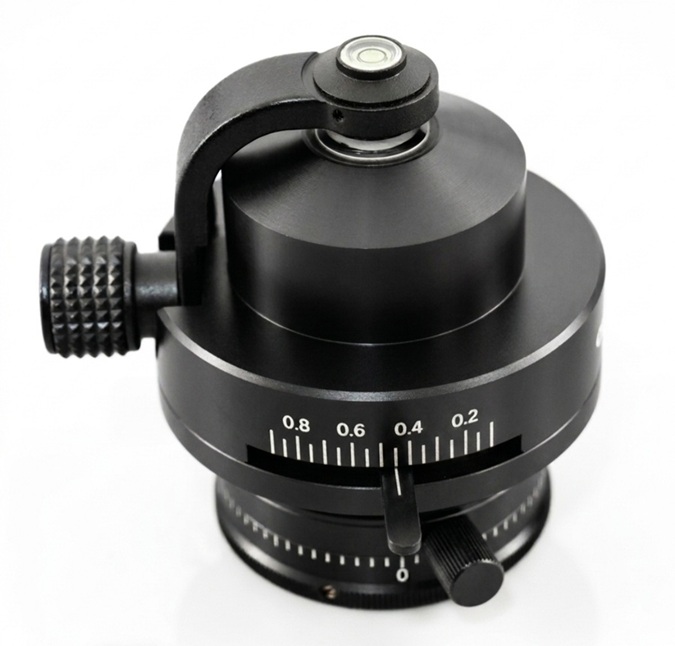
The BH2-NCF (Olympus 6-LP135) is similar to the BH2-NC, except that it contains modified Wollaston prisms matched to the requirements of the DPlan UV Apo and D UV Apo objectives (rather than the SPlan objectives) for fluorescence applications. Like the BH2-NC, the BH2-NCF has a maximum numerical aperture of 1.40, a focal length of 10mm, and with a rotatable sliding polarizer (with an auxiliary clamping wrench) and an adjustable iris diaphragm.
The BH2-NCF includes four modified Wollaston prisms for DIC using the 10x UV, 20x UV, 20x oil UV, 40x oil UV, and 100x oil UV DPlan Apo objectives, as well as the 40x oil UV D Apo and the 100x oil SPlan objectives. It also contains two centerable phase annuli for phase contrast using the 10x UV, 40x oil UV, and 100x oil UV DPlan Apo phase contrast objectives, as well as the 40x oil UV and 100x oil UV D Apo and 10x and 100x oil SPlan phase contrast objectives. A brightfield position is also included.
In order to achieve Nomarski DIC imaging, the BH2-NCF must be used with the BH2-NAF Nomarski intermediate tube, with BH2-ANF analyzer.
 BH2-POC Condenser
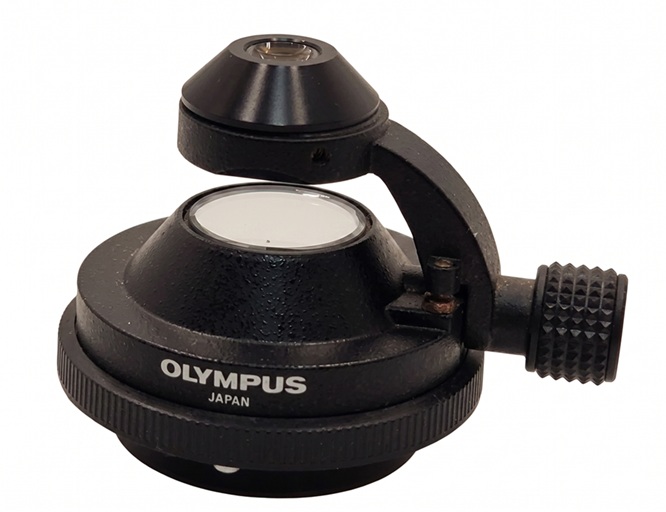
The BH2-POC (Olympus 6-P609) is a dry polarizing condenser intended for usage on the BHTP or BHSP polarizing microscopes.
Like the BH2-SC condenser, the BH2-POC has a “swingable” top element which may be swung into or out of the optical path to accommodate a wider range of field coverage than condensers with fixed top elements. When the top element is swing into the optical path, the maximum numerical aperture is 0.9, the focal length is 7.2mm, and the field coverage is suitable for usage with 10x through 100x objectives. When the top element is swung out of the optical path, the maximum numerical aperture is 0.25, the focal length is 28.8mm, and the field coverage is suitable for usage with 2x through 10x objectives.
The BH2-POC also contains an integral linear polarizer which can be rotated the full 360 degree range.
The BH2-POC may be used for non-polarizing applications, but be aware that the integral linear polarizer will impose a full stop (i.e., 50%) light loss to the optics.
It is important to note that to prevent damage to the condenser, the BH2-POC must never be used with oil immersion to the slide! The U-POC2 condenser from the BX series can be used in place of the BH2-POC.
 BH2-SC Condenser
The BH2-SC (Olympus 6-LB609) is a dry condenser comprised of four elements in three groups. This condenser includes a “swingable” top element which may be swung into or out of the optical path to accommodate a wider range of field coverage than condensers with fixed top elements.
When the top element is swing into the optical path, the maximum numerical aperture is 0.9, the focal length is 12mm, and the field coverage is suitable for usage with 10x through 100x objectives. When the top element is swung out of the optical path, the maximum numerical aperture is 0.16, the focal length is 220mm, and the field coverage is suitable for usage with 2x through 4x objectives.
It is important to note that to prevent damage to the condenser, the BH2-SC must never be used with oil immersion to the slide!
The modest NA of 0.9 may sound limiting, but unless a condenser is oiled to the bottom of the slide, no condenser on the planet will provide an NA significantly above 0.9. So, for those in the crowd like me who don’t typically bother oiling the condenser to the bottom of the slide when using oil immersion, or for those who rarely use oil immersion at all, the BH2-SC is an excellent condenser choice.
The optically similar U-SC2 (Olympus 6-U1212) condenser from the BX series can be used in place of the BH2-SC.
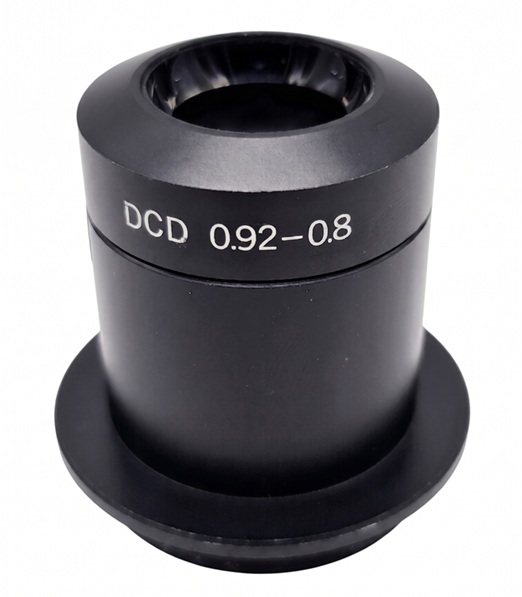 BH2-DCD Condenser
The BH2-DCD darkfield condenser is a dry condenser comprised of one element in one group, which produces a hollow cone of illumination with a numerical aperture of 0.8 through 0.92 and a focal length of 11.8mm. The BH2-DCD is suitable for usage with low-power objectives from 10x through 40x.
It is important to note that to prevent damage to the condenser, the BH2-DCD must never be used with oil immersion to the slide! The optically similar U-DCD condenser from the BX series can be used in place of the BH2-DCD.
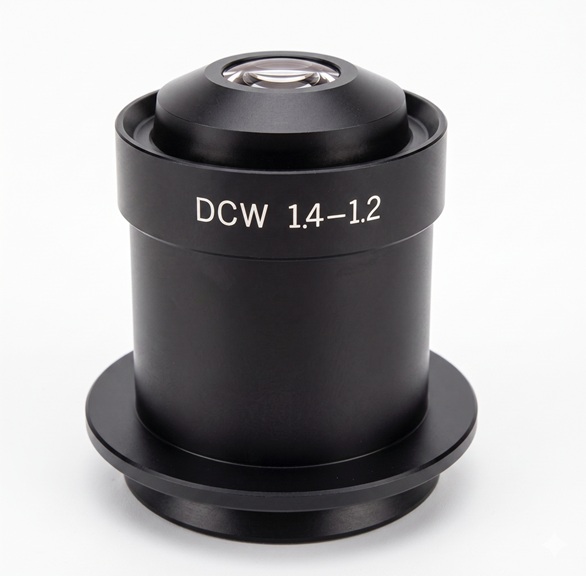 BH2-DCW Condenser
The BH2-DCW condenser is an oil immersion darkfield condenser comprised of two elements in one group, which produces a hollow cone of illumination with a numerical aperture of 1.2 through 1.4 and a focal length of 7.65mm. The BH2-DCW is suitable for usage with higher-power objectives from 10x through 100x.
Unlike other oil immersion condensers where the use of immersion oil between the top element and the slide is optional, this condenser must always be oil-immersed to the bottom surface of the slide, or you will see no light in the field of view!
When used for 100x darkfield, the 100x objective must contain an integral iris diaphragm to allow the numerical aperture of the objective to be reduced below 1.2. The optically similar U-DCW (Olympus 6-U185) condenser from the BX series can be used in place of BH2-DCW.
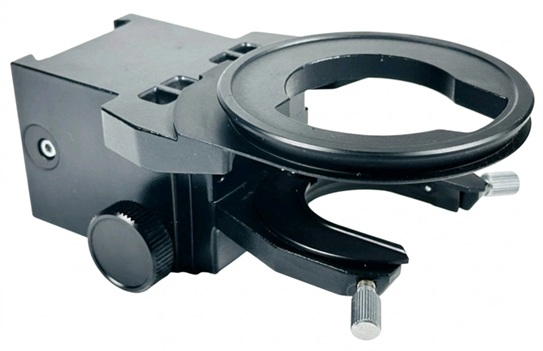 BH2-CH Substage Assembly
The BH2-CH substage assembly fits onto the sliding focus block of the BHS/BHSP/BHSU and BHT/BHTP/BHTU stands, and is secured in place by using an M3 hex driver to snug the locking pawl. The BH2-CH provides a mounting ring for the modular stages (except the BH2-SRP) and a mounting yoke for the modular condensers in the BH2 family.
The condenser mounting yoke features two thumbscrews for centering the condenser and a thumbscrew to lock the condenser into the yoke. The BH2-CH includes two knobs (left and right) to adjust the condenser height via an integral rack and pinion mechanism, and an adjustable height stop to limit the maximum condenser height.
Click here to see a PDF of the Empire of Dirt Workshop BH2-CH repair guide.
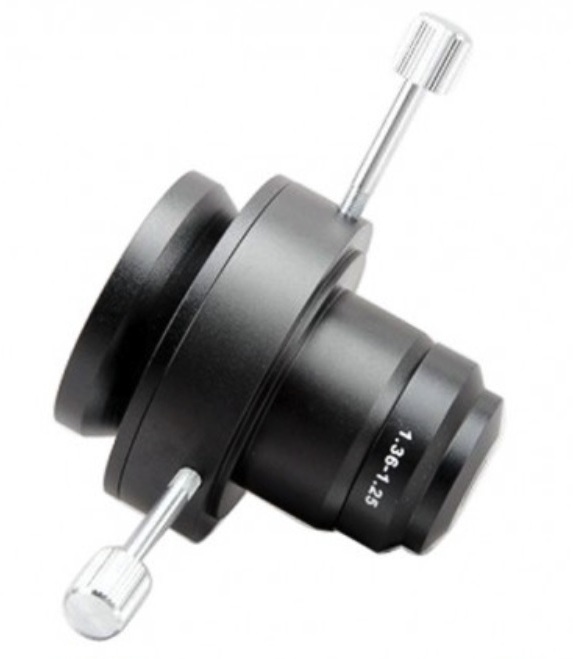
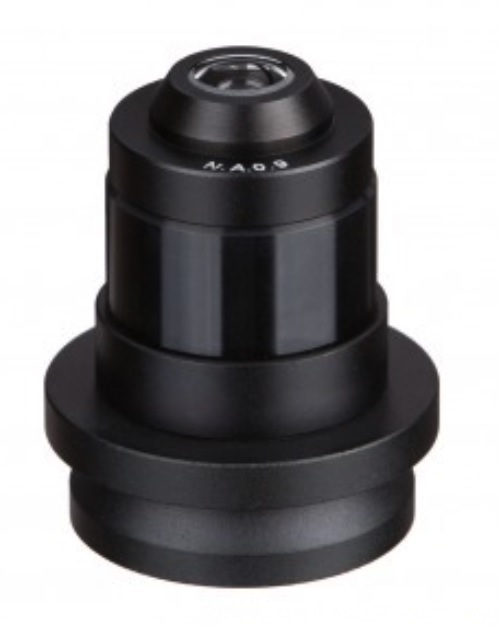 Amscope DK-DRY200 Darkfield Condenser
AmScope sells a dry darkfield condenser for their T660/690 scopes (DK-DRY200) which includes a dovetail mount compatible with either the BH2 (early versions of the condenser) or with Nikon scopes (later versions of the condenser).
Since the Nikon dovetail is slightly smaller than that of the BH2, the later version of this condenser is not strictly compatible with the BH2. While it will fit into the condenser mounting yoke, the mounting screw cannot properly lock the condenser in place, with a resulting loose fit that allows the condenser to shift position within the yoke.
As of this writing, the images of this condenser on the AmScope website still show the original Olympus compatible mount, but that is very likely not what you will receive if you order this from AmScope. If you order one of these, and it happens to show up with the proper Olympus dovetail, consider yourself lucky and do not look back.
If it shows up with the smaller Nikon dovetail, you can make suitable replacement for the mount by 3D printing the STL file below. Simply remove the three screws securing the AmScope mount to the condenser body (be careful, as they seem to be secured in place with some sort of chemical thread locker) and remove the AmScope mount. Install Jason’s replacement part using the same three screws, making sure to orient the part such that the alignment feature is located on the back side of the condenser, thereby allowing the centering thumbscrews to face forward for ease of accessibility.
Keep in mind that Amscope could change their condensers again tomorrow, in which case none of this will apply. If you decide to purchase one, make sure you can return it if necessary.
 Amscope DK-OIL200 Darkfield Condenser
AmScope sells an oil darkfield condenser for their T660/690 scopes (DK-OIL200) which include a dovetail mount compatible with either the BH2 (early versions of the condenser) or with Nikon scopes (later versions of the condenser).
Since the Nikon dovetail is slightly smaller than that of the BH2, the later version of this condenser is not strictly compatible with the BH2. While it will fit into the condenser mounting yoke, the mounting screw cannot properly lock the condenser in place, with a resulting loose fit that allows the condenser to shift position within the yoke.
As of this writing, the images of this condenser on the AmScope website still show the original Olympus-compatible mount, but that is very likely not what you will receive if you order this from AmScope. If you order one of these, and it happens to show up with the proper Olympus dovetail, consider yourself lucky and do not look back.
If it shows up with the smaller Nikon dovetail, you can make a suitable replacement for the mount by 3D printing the STL file below. Simply unscrew the AmScope dovetail from the condenser body (it attaches via M32x.5 threads), and press the exposed male threads of the condenser body into the opening of the 3D-printed Olympus mount.
Keep in mind that Amscope could change their condensers again tomorrow, in which case none of this will apply. If you decide to purchase one, make sure you can return it if necessary.
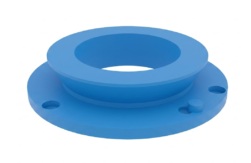 Jason Osmann’s BH2 Dovetail Mount for Amscope Darkfield Condensers
An STL file for a replacement dovetail mount for the Amscope DK-DRY200 and DK-OIL200 darkfield condensers can be found here. This mount was designed and made freely available to the BH2 community by Jason Osmann (of YouTube’s “Diet Tom” fame).
 A Few Words About Nikon Condensers
There is a common misconception that the Olympus BH2 scopes and the competing Nikon finite scopes of the same era share the same dovetail mount on their condensers, but this is not quite true. The dovetail on the Nikon scopes is slightly smaller than that of the BH2 scopes.
Because of this, the Nikon condensers will usually mount onto BH2 scopes (with the condenser centering adjustments compensating for the intrinsic centering error caused by the incorrect dovetail size), but the BH2 condensers will not mount onto Nikon scopes.
 BH2 Condenser Dovetail
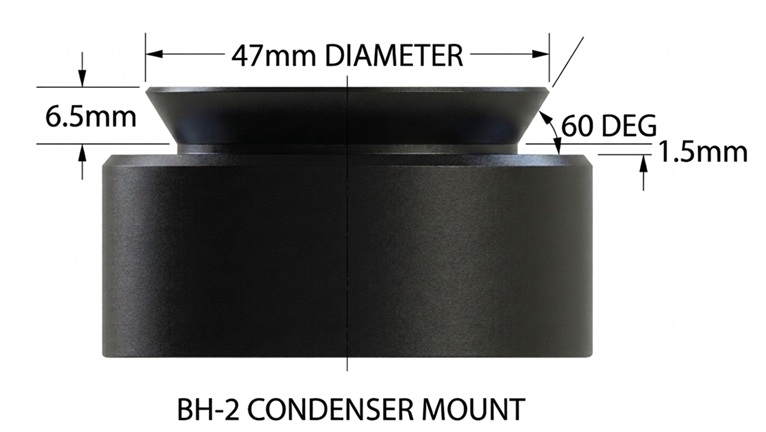
The image here shows an adapter designed to allow the Vanox wet darkfield condenser to be used on a BH2 scope. This image includes the physical dimensions of the circular mounting dovetail of the various BH2 condensers.
Note that these dimensions were measured from a BH2-CD condenser using digital calipers, and as such should not be assumed to be particularly accurate. However, when tested, the resulting fit of the 3D printed adapter in the condenser-mounting yoke of the BH2 substage assembly was good.
There is a common misconception that the Olympus BH2 scopes and the competing Nikon finite scopes of the same era share the same dovetail mount on their condensers, but this is not quite true. The dovetail on the Nikon scopes is slightly smaller than that of the BH2 scopes.
Because of this, the Nikon condensers will usually mount onto BH2 scopes (with the condenser centering adjustments compensating for the intrinsic centering error caused by the incorrect dovetail size), but the BH2 condensers will not mount onto Nikon scopes. Sometimes the BH2 thumbscrews condensers cannot lock the undersized Nikon mounts in place.